You get a higher concentration, so each unit holds more peptide
When we say antioxidants, were not talking about NAD+ or resveratrol, which are also gaining well-deserved attention for their role in supporting cellular repair
AOD 9604 does not affect appetite, blood sugar, or hormone levels in any meaningful way

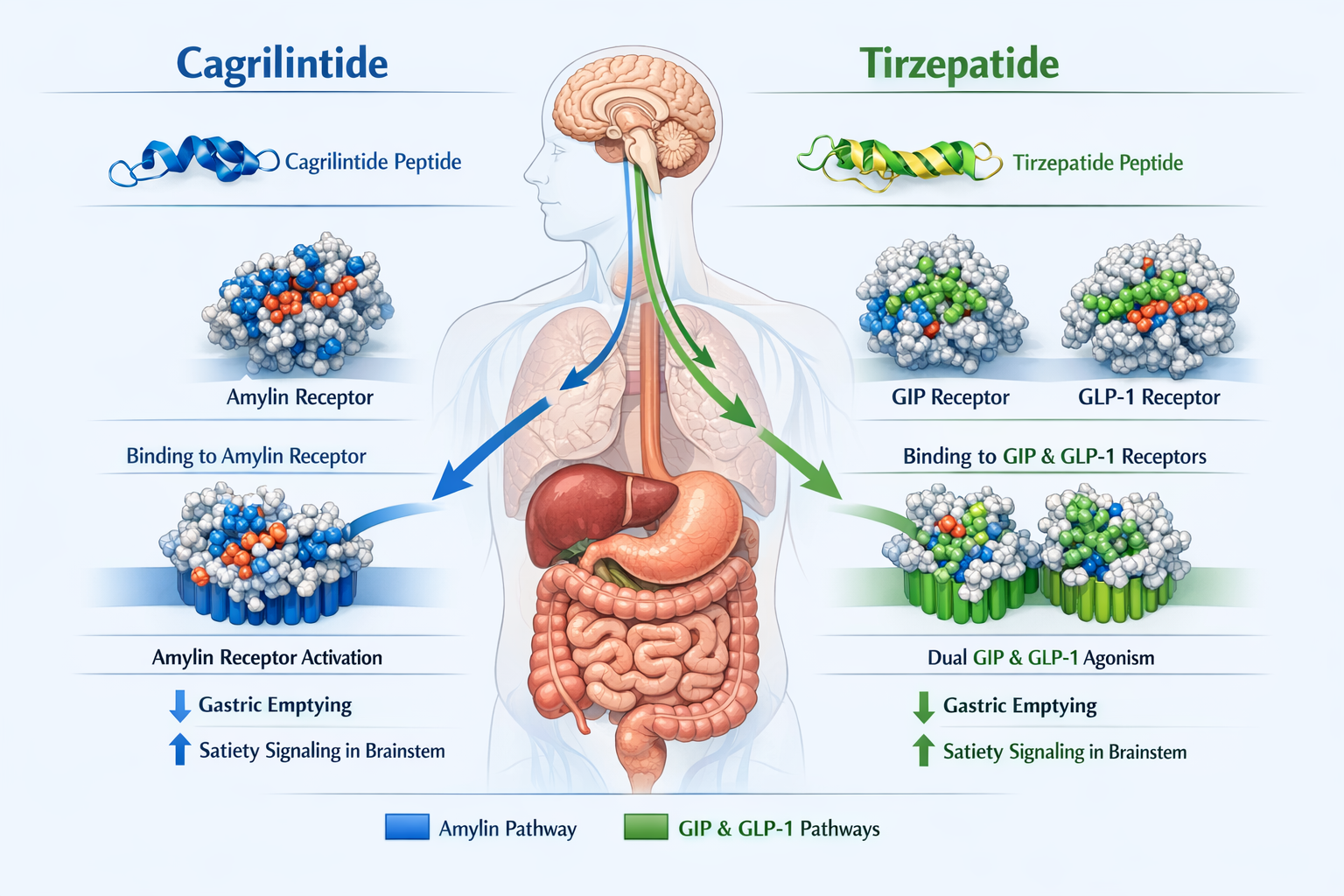
Complementary Mechanisms The appeal of combining cagrilintide with tirzepatide lies in their complementary but non-overlapping mechanisms: Tirzepatide Actions: GIP receptor activation Enhanced insulin secretion, potential fat metabolism benefits GLP-1 receptor activation Glucagon suppression, gastric emptying delay, appetite reduction Dual incretin effect Synergistic metabolic benefits Cagrilintide Actions: Amylin receptor activation Independent satiety signaling Area postrema stimulation Central appetite suppression Gastric emptying delay Complementary to but distinct from GLP-1 effects Potential Synergistic Effects Theoretical synergies might include: Enhanced satiety through multiple independent pathways Greater weight loss than either peptide alone Improved glycemic control through complementary mechanisms Broader metabolic benefits affecting multiple systems Potential for lower doses of each component while maintaining efficacy Challenges of Combination Approaches However, combination therapy also presents challenges: Compounding side effects Overlapping GI symptoms may be additive Complex titration Optimizing two peptides simultaneously is more challenging Cost considerations Two peptides are more expensive than one Adherence complexity Multiple injections may reduce compliance Unknown interactions Long-term safety of combinations requires study These factors explain why combination approaches require careful research and clinical validation before widespread adoption
Its small molecular size and targeted enzymatic interaction place it at the forefront of next-generation metabolic research